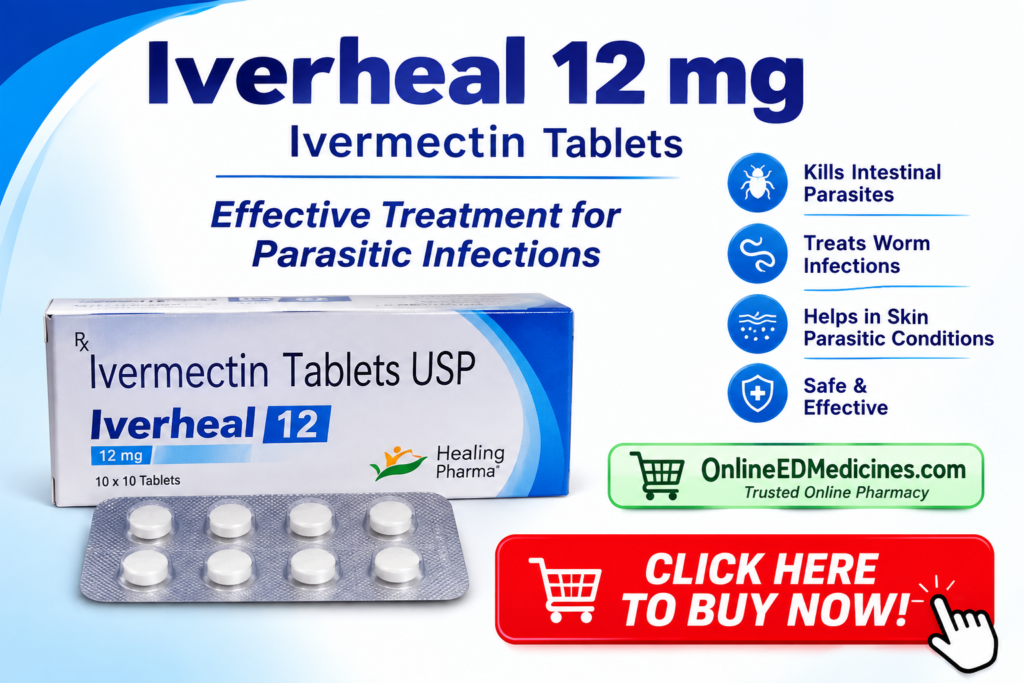
How Does Iverheal 12 mg Ivermectin Work? Mechanism, Uses, Dosage, and Safety
Introduction
Iverheal 12 mg Ivermectin is a tablet marketed as containing ivermectin, an antiparasitic medicine used to treat certain infections caused by parasites. It works by interfering with specific nerve and muscle functions in susceptible parasites, which can lead to paralysis and help the body eliminate them.
Understanding how Iverheal 12 mg works can help readers learn why ivermectin is prescribed for certain parasitic infections, why the correct dosage matters, and why medical guidance is important before using this medicine. The medicine is not effective against every parasite or every condition that causes itching, stomach discomfort, or skin irritation.
Ivermectin is an established treatment for conditions such as strongyloidiasis and onchocerciasis. Oral ivermectin may also be prescribed for scabies in selected circumstances, depending on clinical guidance and local regulations.
This article explains the mechanism of action of Iverheal 12 mg Ivermectin, its uses, dosage considerations, possible side effects, precautions, and frequently asked questions.
Medical disclaimer: This article is for general educational purposes and does not replace professional medical advice. Verify the product’s active ingredient and strength on its packaging, and take ivermectin only as directed by a qualified healthcare professional.
What Is Iverheal 12 mg Ivermectin?
Iverheal 12 mg is a brand-name medicine marketed as containing ivermectin. Ivermectin belongs to a group of medicines called antiparasitic agents, which are used to treat certain infections caused by parasites.
The number 12 mg refers to the amount of ivermectin in the tablet if confirmed by the product label. It does not mean that every patient should take one tablet or that this strength is appropriate for every infection.
The prescribed regimen depends on the diagnosis, body weight, medical history, and treatment recommendations for the particular parasite. Using the wrong dose or repeating treatment unnecessarily may increase the risk of side effects.
Key Information About Iverheal 12 mg
- Brand name: Iverheal 12 mg
- Active ingredient: Ivermectin, as stated on the product label
- Medicine category: Antiparasitic
- Dosage form: Oral tablet
- Main purpose: Treatment of selected parasitic infections
- How it works: Disrupts nerve and muscle function in susceptible parasites
- Dosage: Depends on the infection, body weight, and prescription
Always check the product leaflet for the manufacturer’s instructions and consult a healthcare professional if you are uncertain about the medicine.
How Does Iverheal 12 mg Ivermectin Work?
Iverheal 12 mg works through ivermectin, which acts on particular biological structures in susceptible parasites. Its main antiparasitic action involves specific chloride channels that help regulate nerve and muscle activity.
1. It Targets Specific Parasite Channels
Ivermectin interacts with glutamate-gated chloride channels found in many invertebrates, including susceptible parasites. These channels help control the movement of chloride ions across cell membranes.
When ivermectin affects these channels, it increases chloride-ion permeability. This changes the electrical activity of the affected nerve and muscle cells.
These effects are important because parasites rely on normal nerve and muscle function to move, feed, and survive.
2. It Disrupts Nerve and Muscle Activity
The altered chloride-ion movement can cause hyperpolarisation of susceptible parasite cells. This reduces their ability to transmit normal nerve signals and control muscle activity.
As a result, susceptible parasites may become paralysed or unable to perform essential functions. This contributes to the medicine’s antiparasitic effect.
Ivermectin does not work in exactly the same way against every parasite. Its effectiveness depends on the organism involved and the infection being treated.
3. It Helps the Body Control the Infection
After ivermectin affects susceptible parasites, the body can help eliminate them or reduce their numbers. The clinical result depends on the parasite’s life cycle and the type of infection.
For example, ivermectin reduces the number of microfilariae in onchocerciasis, helping reduce symptoms and the risk of certain complications. In strongyloidiasis, it is used to treat the intestinal parasitic infection.
The medicine does not necessarily kill every life stage of every parasite. Some conditions require additional treatment, repeat doses, or follow-up testing under medical supervision.
4. It Does Not Provide Instant Relief From Every Symptom
Although ivermectin acts against susceptible parasites, the symptoms associated with an infection may take longer to improve.
For example, itching after successful scabies treatment can continue because the skin remains inflamed or irritated. Persistent or worsening symptoms may also indicate reinfestation, an incomplete response, or a different skin condition.
Do not take extra tablets simply because symptoms have not disappeared immediately. A healthcare professional can assess whether further treatment is necessary.
Why Does Ivermectin Affect Parasites?
Ivermectin acts on biological targets that are particularly important in many invertebrates. The chloride channels it affects are different from the major chloride-channel systems involved in normal human nerve signalling.
This selectivity contributes to ivermectin’s usefulness as an antiparasitic medicine. However, it does not make the medicine completely risk-free for humans.
Side effects can occur, and the likelihood of harm may increase if the medicine is taken incorrectly or in excessive amounts. Certain parasitic infections also create special risks, which is why the diagnosis and treatment plan matter.
The medicine should therefore be used only for an appropriate medical indication and according to professional instructions.
What Is Iverheal 12 mg Used For?
Iverheal 12 mg may be prescribed if a healthcare professional determines that ivermectin is appropriate for a specific parasitic infection.
1. Strongyloidiasis
Strongyloidiasis is an intestinal infection caused by the roundworm Strongyloides stercoralis. Infection can occur when larvae in contaminated soil enter the body through the skin.
Some people have few or no symptoms, while others may experience abdominal discomfort, diarrhoea, skin irritation, or other digestive problems.
Ivermectin is a first-line treatment for strongyloidiasis in many clinical guidelines. The dose is determined according to body weight and the recommended treatment regimen.
Follow-up may be necessary if symptoms continue or laboratory tests remain positive. People with weakened immune systems need particular medical attention because the infection can occasionally become severe.
2. Onchocerciasis or River Blindness
Onchocerciasis, commonly known as river blindness, is caused by Onchocerca volvulus. It is transmitted through bites from infected blackflies.
The infection may cause intense itching, skin changes, and eye complications that can affect vision.
Ivermectin helps reduce the number of immature parasites, known as microfilariae. It does not eliminate all adult worms, so repeat treatment and ongoing monitoring may be required under specialist or public-health guidance.
3. Scabies
Scabies is a contagious skin infestation caused by the mite Sarcoptes scabiei. It commonly causes intense itching, often worse at night, and a rash that may appear between the fingers, around the wrists, or elsewhere on the body.
Oral ivermectin may be prescribed in selected circumstances. Topical permethrin is another commonly recommended treatment.
For classic scabies, clinical guidance commonly recommends two weight-based doses of oral ivermectin separated by approximately 7–14 days because ivermectin does not reliably kill all mite eggs. The exact regimen should be determined by a healthcare professional.
Treatment may also involve managing close contacts and following appropriate cleaning instructions to reduce the risk of reinfestation.
4. Other Selected Parasitic Infections
Ivermectin may be used for other parasitic infections in selected circumstances, depending on the organism and clinical guidance. It is not effective against every parasite, and symptoms alone cannot establish which medicine is appropriate.
A healthcare professional may recommend examination or laboratory tests to identify the cause of an infection before selecting treatment.
For further information, see the CDC’s clinical guidance on strongyloidiasis, onchocerciasis, and scabies.
How Long Does Iverheal 12 mg Take to Work?
The time needed for ivermectin to produce noticeable improvement depends on the infection, the parasite involved, and the individual’s response to treatment.
Ivermectin may begin affecting susceptible parasites after it is absorbed, but this does not mean all symptoms will disappear immediately. Some infections require follow-up testing or additional treatment according to an established clinical regimen.
In scabies, itching can continue for a period even after treatment has worked. New burrows, new rashes, worsening symptoms, or persistent problems should be assessed by a healthcare professional.
Do not repeat the dose without advice if you do not notice immediate improvement.
Iverheal 12 mg Dosage: Important Considerations
There is no single dosage schedule suitable for everyone taking Iverheal 12 mg. The correct ivermectin regimen depends on the condition being treated, body weight, medical history, and the healthcare professional’s instructions.
For certain infections, dosing is calculated in micrograms per kilogram of body weight. A tablet’s strength alone is therefore not enough to determine the correct dose.
Factors That Affect Dosage
A healthcare professional may consider:
- The type of parasitic infection
- The patient’s body weight and age
- The severity of the condition
- Existing medical conditions
- Pregnancy or breastfeeding status
- Other medicines being taken
- Whether follow-up treatment or testing is required
How Should You Take Iverheal 12 mg?
If prescribed, follow the directions on your prescription and product leaflet.
- Take only the prescribed amount.
- Swallow the tablet as directed, with water.
- Follow the food instructions for the particular infection.
- Do not take additional tablets if symptoms do not improve immediately.
- Do not repeat or extend treatment without medical advice.
- Attend any recommended follow-up appointments or tests.
For some approved oral ivermectin indications, product labeling recommends taking the medicine with water on an empty stomach. For oral ivermectin used for classic scabies, some clinical guidance recommends taking it with food. Follow the instructions given for your specific condition.
What If You Miss a Dose?
The appropriate action depends on the prescribed schedule. Ask your healthcare professional or pharmacist what to do. Do not double the next dose to make up for a missed dose unless a qualified professional specifically instructs you to do so.
What If You Take Too Much?
Taking more ivermectin than prescribed may increase the risk of adverse effects. If you accidentally take an extra dose or suspect an overdose, seek prompt advice from a healthcare professional or local poison-information service.
Get emergency medical help if you develop severe dizziness, confusion, difficulty walking, seizures, difficulty breathing, or reduced consciousness.
Common Side Effects of Iverheal 12 mg
Like other medicines, ivermectin can cause side effects. Not everyone experiences them, and their type or severity may depend on the infection being treated.
Possible side effects include:
- Dizziness
- Headache
- Nausea
- Diarrhoea
- Abdominal discomfort
- Tiredness
- Itching or skin irritation
Some symptoms may also be caused by the underlying infection or the body’s response to dying parasites. A healthcare professional can help assess the likely cause.
If side effects persist, become troublesome, or worsen, seek medical advice. Avoid driving or operating machinery if you feel dizzy or unusually tired.
Serious Side Effects
Seek urgent medical attention if you experience:
- Severe confusion or unusual drowsiness
- Difficulty walking or loss of coordination
- Seizures
- Fainting or severe dizziness
- Difficulty breathing or swelling of the face, lips, tongue, or throat
- A severe rash, blistering, or peeling skin
- Significant changes in vision or consciousness
Serious reactions are uncommon, but they require prompt assessment. Some people treated for parasitic infections can also experience inflammatory reactions associated with parasite death. These reactions may need medical evaluation and treatment.
Precautions Before Taking Iverheal 12 mg
Before starting treatment, tell your healthcare professional about your medical history, allergies, and all medicines you use.
Pregnancy
Safety information for ivermectin use during pregnancy is limited for some indications. If you are pregnant, planning a pregnancy, or think you may be pregnant, discuss the potential benefits and risks with a healthcare professional before taking it.
Do not self-medicate during pregnancy.
Breastfeeding
Ivermectin may pass into breast milk, and whether treatment is appropriate depends on the circumstances. Ask a healthcare professional to assess the risks and benefits before using it while breastfeeding.
Children
The safety of ivermectin in children weighing less than 15 kg has not been firmly established for several uses. Children should receive treatment only under professional guidance. The tablet strength should never replace an appropriate weight-based assessment.
Liver or Other Medical Conditions
Tell your healthcare professional if you have liver disease, a neurological condition, a weakened immune system, or another significant medical problem. They can assess whether ivermectin is appropriate and whether monitoring is needed.
Possible Loa loa Infection
People who have lived in or travelled to areas where Loa loa infection occurs may require special evaluation before receiving ivermectin for certain infections. In people with high levels of this parasite, treatment can trigger severe neurological complications.
Tell your clinician about relevant travel and residence history before starting treatment.
Allergies
Do not take the medicine if you have a known allergy to ivermectin or any ingredient in the product. Check the product leaflet for the complete ingredient list.
Drug Interactions and Iverheal 12 mg
Ivermectin may interact with other medicines, and certain combinations can affect safety or the risk of side effects.
Tell your healthcare professional about all prescription medicines, over-the-counter products, vitamins, and herbal supplements you use. Do not start, stop, or change another medicine without appropriate advice.
Your prescriber may need to review medicines that affect the central nervous system or could alter ivermectin exposure. The importance of a potential interaction depends on the specific medicine, dose, and your health circumstances.
Do not assume a medicine is safe to combine with Iverheal 12 mg simply because it is available without a prescription.
Is Iverheal 12 mg Safe for Long-Term Use?
Iverheal 12 mg should not be taken regularly or for a prolonged period unless a healthcare professional has prescribed a regimen that requires it.
Some parasitic infections require repeat treatment or long-term follow-up. For example, onchocerciasis management may involve treatment at intervals under clinical or public-health guidance. This is different from taking ivermectin daily without a diagnosis.
Taking more medicine or using it more frequently than recommended does not necessarily improve treatment and may increase the risk of harm.
If symptoms return after treatment, consult a healthcare professional to determine whether the infection persists, has recurred, or has another cause.
How Should Iverheal 12 mg Be Stored?
Store the medicine according to the instructions on its packaging or leaflet.
- Keep tablets in their original packaging when appropriate.
- Protect the medicine from excessive heat and moisture.
- Keep it out of the reach of children and pets.
- Do not use tablets that are damaged, expired, or appear altered.
- Ask a pharmacist how to dispose of unused medicine safely.
Storage instructions can vary by manufacturer, so follow the product-specific information.
Frequently Asked Questions About How Iverheal 12 mg Works
1. How does Iverheal 12 mg Ivermectin work in the body?
Ivermectin affects specific chloride channels in susceptible parasites, disrupting normal nerve and muscle function. This can cause paralysis and help the body eliminate the parasites.
2. Does Iverheal 12 mg kill parasites?
Ivermectin affects susceptible parasites, but its precise effects depend on the organism and its life stage. Some infections require additional treatment or follow-up.
3. How quickly does Iverheal 12 mg start working?
The medicine may begin affecting susceptible parasites after absorption, but symptom improvement varies by infection. Some conditions require follow-up or repeat treatment under medical guidance.
4. Can Iverheal 12 mg treat scabies?
Oral ivermectin may be prescribed for scabies in selected circumstances. The treatment regimen differs from those used for other infections, so a healthcare professional should determine whether it is suitable.
5. Can I take Iverheal 12 mg every day?
Do not take it daily unless a healthcare professional has specifically prescribed that schedule. Treatment frequency varies by infection, and unnecessary doses may increase the risk of side effects.
6. What are the common side effects?
Possible side effects include dizziness, headache, nausea, diarrhoea, abdominal discomfort, tiredness, and itching. Seek medical advice if symptoms are persistent or troublesome.
7. Can I take Iverheal 12 mg with food?
Food instructions depend on the condition being treated. Some product labeling recommends taking oral ivermectin on an empty stomach, while some scabies guidance recommends taking it with food. Follow the instructions given by your healthcare professional.
8. Can children take Iverheal 12 mg?
Children should receive ivermectin only under professional guidance. Suitability and dosing depend on body weight, age, and the infection being treated.
9. What should I do if symptoms persist?
Contact your healthcare professional. Persistent symptoms may indicate that further assessment, testing, or a different treatment is needed. Do not repeat the dose on your own.
10. Is Iverheal 12 mg suitable for every infection?
No. Ivermectin treats certain parasitic infections, not all infections or causes of itching. A proper diagnosis is essential to selecting the appropriate medicine.
Conclusion
Iverheal 12 mg Ivermectin is marketed as a tablet containing ivermectin, an antiparasitic medicine used to treat selected infections. It works by affecting specific nerve and muscle functions in susceptible parasites, helping the body control or eliminate them.
Ivermectin is an established treatment for conditions such as strongyloidiasis and onchocerciasis. Oral ivermectin may also be used for scabies in selected circumstances, but the appropriate treatment depends on the diagnosis and individual medical factors.
For safe use, verify the product’s ingredients, follow the prescribed instructions, disclose other medicines and relevant health conditions, and seek medical advice if symptoms persist or worsen. Do not increase the dose or take the medicine more frequently than prescribed.
Medical Information Sources
- CDC: Clinical Care of Strongyloides
- CDC: Clinical Treatment of Onchocerciasis
- CDC: Clinical Care of Scabies
- DailyMed: Ivermectin Drug Information
This article is for general educational purposes and should not replace professional diagnosis, prescription, or individual medical advice.