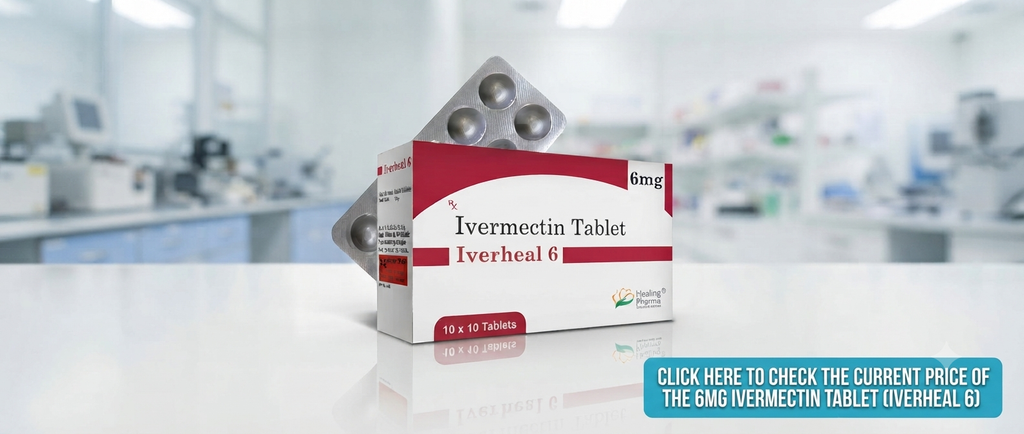
What Is Iverheal 6? Uses, Benefits, Dosage, Side Effects, and Safety Guide
Introduction
Iverheal 6 is a medicine marketed as containing ivermectin, an antiparasitic medication used to treat certain infections caused by parasites. Ivermectin works by disrupting specific nerve and muscle functions in susceptible parasites, helping the body control or eliminate them. Depending on the diagnosis and local clinical guidance, ivermectin may be prescribed for conditions such as intestinal strongyloidiasis and onchocerciasis. Oral ivermectin may also be considered for selected cases of scabies.
Understanding what Iverheal 6 is, how it works, and which infections ivermectin can treat is important before considering any medication. Although ivermectin has established medical uses, it is not effective against every parasite or every skin condition. The appropriate treatment depends on the infection, body weight, medical history, and advice from a qualified healthcare professional.
This guide explains Iverheal 6, its potential uses and benefits, how ivermectin works, dosage considerations, possible side effects, precautions, and frequently asked questions.
What Is Iverheal 6?
Iverheal 6 is a product marketed as containing ivermectin. The number in the product name commonly refers to a strength of 6 mg, but the exact ingredient and strength should always be confirmed on the packaging or through a pharmacist.
Ivermectin belongs to a group of medicines known as antiparasitic agents. It is used to treat specific parasitic infections by affecting biological processes that susceptible parasites need to survive.
The medicine is not a general-purpose treatment for all worms, skin complaints, or infections. Different parasites require different medicines, and the correct treatment depends on identifying or strongly suspecting the organism responsible.
The tablet strength alone does not determine the correct dose. Ivermectin dosing often depends on body weight, the infection being treated, and the treatment schedule recommended by a healthcare professional.
Before using Iverheal 6, check the active ingredient, stated strength, manufacturer information, expiry date, and instructions. Obtain medicines from a legitimate pharmacy and ask a pharmacist or prescriber to verify the product if any information is unclear.
What Is Iverheal 6 Used For?
The approved uses of ivermectin vary according to the product and country. Established oral uses include certain parasitic infections, particularly strongyloidiasis and onchocerciasis. Oral ivermectin may also be prescribed for selected cases of scabies under clinical guidance.
1. Treatment of Intestinal Strongyloidiasis
Strongyloidiasis is an intestinal infection caused by the parasitic roundworm Strongyloides stercoralis. The infection can cause abdominal discomfort, diarrhea, skin symptoms, and other health problems. Some people experience few symptoms, so the infection may go unnoticed without appropriate assessment.
Ivermectin is a first-line treatment for uncomplicated strongyloidiasis in many clinical guidelines. When appropriately prescribed, it can help eliminate the parasite and reduce the risk of complications.
Strongyloidiasis deserves particular attention in people with weakened immune systems. In certain circumstances, the infection can become severe and life-threatening. Prompt medical evaluation is important when the infection is suspected.
A clinician may recommend follow-up testing if symptoms continue or there is concern that the infection has not cleared. Treatment decisions should be based on the diagnosis and clinical circumstances rather than the product name alone.
2. Management of Onchocerciasis
Onchocerciasis, also known as river blindness, is a parasitic disease caused by Onchocerca volvulus. It spreads through the bites of infected blackflies and can lead to skin problems and potentially serious eye complications.
Ivermectin helps reduce the number of immature parasites, called microfilariae. This can help control symptoms and reduce the risk of certain complications.
However, ivermectin does not reliably eliminate adult worms. Treatment may need to be repeated within a structured clinical or public-health program. The schedule depends on professional guidance and disease-control recommendations.
People who may have onchocerciasis should receive appropriate medical assessment rather than attempting to treat the disease independently.
3. Use for Selected Cases of Scabies
Scabies is a contagious skin infestation caused by the mite Sarcoptes scabiei. Common symptoms include intense itching, a rash, and small burrow-like marks on the skin. Itching often becomes worse at night.
Oral ivermectin may be considered when topical treatment is unsuitable, difficult to use, or has not worked as expected. It may also be part of treatment for certain cases of crusted scabies.
However, oral ivermectin is not the preferred treatment for every person with scabies. Topical medicines, such as permethrin, are commonly used depending on the patient’s circumstances and local guidance.
Scabies treatment may require repeat medication and measures to reduce reinfestation. Close contacts may also need assessment or treatment, and clothing and bedding may need appropriate handling. Itching can continue for several weeks after successful treatment because the skin remains irritated.
Do not use Iverheal 6 for an itchy rash without confirming the cause. Eczema, allergic reactions, fungal infections, and other conditions can resemble scabies but need different treatments.
4. Other Parasite-Related Conditions
Ivermectin has additional uses in certain clinical circumstances, depending on the parasite, formulation, and local medical guidance. Not all uses are approved for every product or country.
It is important not to assume that Iverheal 6 treats every type of intestinal worm, lice infestation, fungal infection, bacterial infection, or viral illness. Different organisms require different treatments.
A healthcare professional can assess symptoms, exposure history, and test results to determine whether ivermectin is appropriate.
How Does Iverheal 6 Work?
Iverheal 6 is marketed as containing ivermectin. Ivermectin acts on specific biological channels found in susceptible parasites, particularly glutamate-gated chloride channels. These channels help regulate nerve and muscle activity in many invertebrates.
When ivermectin affects these channels, it changes chloride-ion movement and disrupts normal nerve signaling. This can lead to paralysis and death of susceptible parasites, helping the body control or eliminate them.
This mechanism explains why ivermectin is effective for particular parasitic infections. It does not mean the medicine works against every parasite or every type of infection.
The time needed for symptoms to improve varies by condition, severity, and individual response. Some infections may require repeat treatment or follow-up testing to assess whether the parasites have been cleared.
What Are the Potential Benefits of Iverheal 6?
When prescribed for an infection that responds to ivermectin, Iverheal 6 may offer several potential benefits through its active ingredient.
Helps Treat Certain Parasitic Infections
Ivermectin is an established treatment for specific parasitic infections, including strongyloidiasis and onchocerciasis. Its usefulness depends on whether the parasite involved is susceptible to the medicine.
Helps Reduce Susceptible Parasites
By disrupting the normal nerve and muscle functions of susceptible parasites, ivermectin can help reduce the parasite burden. The expected effect varies according to the organism and infection.
May Improve Infection-Related Symptoms
When treatment successfully addresses a susceptible parasite, symptoms associated with the infection may improve. However, symptom relief is not guaranteed, and persistent symptoms may have another cause or require additional assessment.
May Be Used for Selected Scabies Cases
Oral ivermectin may be considered for certain cases of scabies when a healthcare professional determines it is appropriate. The choice between oral and topical treatment depends on individual circumstances and clinical recommendations.
These potential benefits do not make Iverheal 6 a general-purpose medicine. It should not be used as a routine health supplement, as a preventive treatment without an appropriate clinical indication, or for unexplained symptoms.
How Should Iverheal 6 Be Taken?
Iverheal 6 should be taken only when a qualified healthcare professional has determined that ivermectin is appropriate and has explained the treatment schedule.
The correct regimen may depend on several factors:
- Type of infection: Different parasites require different treatment schedules.
- Body weight: Dosing for many ivermectin indications is weight-based.
- Medical history: Existing health conditions may affect treatment decisions.
- Other medicines: Certain medicines may interact with ivermectin or require monitoring.
- Treatment response: Some infections need follow-up testing or additional treatment.
Do not assume that one tablet is appropriate for every adult or that taking multiple tablets is necessary. The strength of the product does not replace individualized dosing instructions.
Follow the prescriber’s directions about timing and food. Instructions may differ according to the indication and product labeling. Do not take extra doses, repeat treatment, or use ivermectin daily unless a qualified healthcare professional specifically directs you to do so.
If you miss a dose, ask your pharmacist or prescriber how to proceed. Do not double the next dose unless you have been instructed to do so.
What Are the Side Effects of Iverheal 6?
Like other medicines, ivermectin can cause side effects. Their likelihood and severity may depend on the treatment regimen, the underlying infection, individual sensitivity, and other health factors.
Possible side effects include:
- Dizziness or light-headedness
- Headache
- Nausea
- Diarrhea
- Abdominal discomfort
- Fatigue
- Itching or skin irritation
Some symptoms may be caused by the underlying infection or the body’s response to treatment rather than the medicine alone. In certain parasitic diseases, inflammatory reactions can occur as parasites die.
Serious Side Effects
Seek urgent medical attention if you experience severe or unusual symptoms, including:
- Difficulty breathing or swelling of the face, lips, tongue, or throat
- Severe rash, blistering, or skin peeling
- Confusion or extreme drowsiness
- Seizures
- Difficulty walking or loss of coordination
- Significant changes in alertness
- New or significant vision problems
People being treated for particular parasitic diseases may experience additional disease-specific reactions. Report worsening symptoms promptly, especially if you have lived in or travelled to an area where other parasitic infections occur.
Who Should Be Careful Before Using Iverheal 6?
Ivermectin is not suitable for everyone. Tell your healthcare professional about your medical history and all medicines or supplements you take before beginning treatment.
Pregnancy and Breastfeeding
If you are pregnant, planning a pregnancy, or breastfeeding, seek medical advice before using ivermectin. The decision depends on the infection, potential risks, available alternatives, and expected benefit of treatment.
Do not begin treatment based only on information from a website or another person’s experience.
Children
Ivermectin’s suitability for children depends on age, weight, condition, and applicable product guidance. Safety has not been firmly established for children weighing less than 15 kg for several uses.
Do not estimate a child’s dose by splitting an adult dose or relying on the product strength alone. A qualified healthcare professional should determine the appropriate treatment.
People With Existing Medical Conditions
Tell your clinician if you have liver disease, neurological problems, a weakened immune system, or other significant health conditions. This information may affect the choice of treatment or monitoring.
People with possible exposure to Loa loa, a parasitic worm found in parts of Central and West Africa, may need special evaluation before ivermectin treatment because severe neurological reactions can occur in certain circumstances.
People Taking Other Medicines
Provide a complete list of prescription medicines, over-the-counter products, and supplements. Ivermectin may interact with some medicines, and the importance of an interaction depends on the specific combination and the patient’s circumstances.
Do not stop a prescribed medicine or combine treatments without professional guidance.
Is Iverheal 6 Safe for Everyone?
No medicine is suitable for every person in every situation. Ivermectin has established medical uses when prescribed appropriately, but its suitability depends on the infection, dose, medical history, and quality of the product.
Using the wrong medicine can delay effective treatment. Taking more than prescribed may increase the risk of adverse effects, and using ivermectin without confirming the cause of symptoms may leave the actual condition untreated.
To support safer use:
- Verify the active ingredient and strength on the packaging.
- Use the medicine only for a condition assessed by a qualified healthcare professional.
- Follow the prescribed dose and schedule.
- Disclose relevant medical conditions and all medicines you take.
- Seek advice if symptoms persist, worsen, or return.
- Obtain medicines from a legitimate, appropriately regulated pharmacy.
Avoid products with unclear ingredients, damaged packaging, missing expiry information, or uncertain sources.
How Long Does Iverheal 6 Take to Work?
There is no single timeframe for every infection treated with ivermectin. The time to improvement depends on the parasite, the severity of the infection, the treatment regimen, and the person’s response.
Some symptoms may improve within days, while other conditions require longer monitoring or repeat treatment. With scabies, itching may continue for a period after successful treatment because the skin remains irritated.
Do not judge treatment success only by how quickly symptoms disappear. Follow your clinician’s instructions about monitoring and arrange reassessment if symptoms persist or worsen.
Can Iverheal 6 Be Taken With Food?
Food instructions depend on the particular ivermectin product and the condition being treated. Some approved ivermectin product labeling recommends taking the medicine on an empty stomach with water, while certain clinical protocols for other indications may give different instructions.
Follow the directions supplied with your specific product and the instructions from your prescriber. If you are unsure whether to take it with food, ask your pharmacist or healthcare professional before using it.
What Happens if You Take Too Much Iverheal 6?
Taking more ivermectin than prescribed can be dangerous. Excessive exposure may cause serious neurological or other adverse effects, including confusion, severe drowsiness, loss of coordination, seizures, or reduced consciousness.
If you take more than prescribed, contact a poison information service or seek urgent medical advice. Do not wait for symptoms to appear or try to manage a suspected overdose with another medicine unless instructed by a medical professional.
Keep the medicine packaging available so healthcare staff can identify the ingredient and strength.
Frequently Asked Questions About Iverheal 6
1. What is Iverheal 6 used for?
Iverheal 6 is marketed as containing ivermectin, an antiparasitic medicine used for certain infections. Established oral uses include strongyloidiasis and onchocerciasis. Oral ivermectin may also be considered for selected cases of scabies under clinical guidance.
2. Is Iverheal 6 a deworming medicine?
Ivermectin treats certain parasitic infections, but it does not treat every type of intestinal worm. Different parasites may require different medicines. A healthcare professional can recommend appropriate treatment after assessing the suspected infection.
3. Can Iverheal 6 treat scabies?
Oral ivermectin may be used for selected scabies cases under medical guidance. Topical medicines are commonly used, and treatment may require repeat dosing or management of close contacts. Do not self-diagnose scabies or determine the dose from tablet strength alone.
4. Can I take Iverheal 6 every day?
Do not take ivermectin daily unless a qualified healthcare professional has specifically prescribed that regimen. Treatment schedules vary by infection and are not determined by the product name alone. Taking extra doses can increase the risk of serious adverse effects.
5. What are the common side effects of Iverheal 6?
Possible side effects include dizziness, headache, nausea, diarrhea, abdominal discomfort, fatigue, and itching. Seek urgent medical care for severe allergic symptoms, confusion, seizures, loss of coordination, significant vision changes, or severe skin reactions.
6. Is Iverheal 6 safe for children?
Use in children depends on age, weight, diagnosis, and applicable product guidance. Safety has not been firmly established for children weighing less than 15 kg for several uses. A pediatric healthcare professional should determine whether ivermectin is appropriate.
7. Can I buy Iverheal 6 without a prescription?
Prescription requirements vary by country and product. Professional guidance is important because the correct treatment depends on the infection, body weight, and medical history. Follow the prescribing rules and pharmacy requirements in your location.
8. What should I do if my symptoms do not improve?
Do not increase the dose or repeat treatment independently. Contact your healthcare professional for reassessment. Persistent symptoms may mean further investigation, a different treatment, or additional monitoring is required.
Conclusion
Iverheal 6 is marketed as a product containing ivermectin, an antiparasitic medicine used to treat certain infections. When prescribed appropriately, ivermectin can help manage conditions such as intestinal strongyloidiasis and onchocerciasis, and it may be considered for selected cases of scabies.
However, it is not a universal treatment for every type of worm, skin complaint, or infection. The appropriate dose and schedule depend on the diagnosis, body weight, health history, and relevant clinical guidance. Possible side effects and important precautions should also be considered.
Before using Iverheal 6, verify the product details, consult a qualified healthcare professional, and follow the prescribed directions. Seek medical advice if symptoms worsen or fail to improve.